Crying Face Emoji: A Designer's Review for Real Projects
When I first opened the Crying Face Emoji file to test it on my machine, I didn't just see a digital image; I saw a mood. As someone who spends hours evaluating designs for clients and personal boutiques, my first instinct is always to look past the cute factor and ask how this will hold up under the needle. This design belongs to the Friends category, which suggests a casual, relatable vibe, but its success in a real-world scenario depends entirely on execution. The prompt describes it as a fun way to raise your mood, and after running a few test stitches, I can confirm that with the right setup, it delivers exactly that.
First Impressions and Visual Personality
The initial layout of the Crying Face Emoji feels approachable and modern. It isn't trying to be a high-art portrait; instead, it leans into the simplicity that makes emojis so universally understood. For an embroidery designer, this is a double-edged sword. The shape is round and familiar, which usually means good stitch distribution, but the emotional expression relies on subtle details like the tears and the mouth. If the stitch density is too low, the sadness might look like a blank face. If it is too high, the fabric could pucker, ruining the intended cuteness.
I immediately thought about where this design naturally belongs. It has a playful energy that fits perfectly with custom apparel for teens or young adults, but it also carries a warmth that works well for baby embroidery. The visual personality is light-hearted, making it ideal for projects meant to bring a smile to the recipient's face. However, the "crying" aspect requires careful consideration regarding the context of the finished product. It shouldn't be used on items where the wearer wants to project strength or seriousness, but rather on things meant for comfort, humor, or shared emotional experiences.
Real-World Application: From Digital File to Finished Product
To truly understand the value of this machine embroidery design, I simulated a real-life scenario: creating a line of small business merchandise for an Etsy shop specializing in gifts for friends. Imagine designing a collection of tote bags and kitchen towels for a friend who loves baking and often jokes about being overwhelmed by life. The Crying Face Emoji would be the perfect centerpiece for a tea towel or a canvas tote bag.
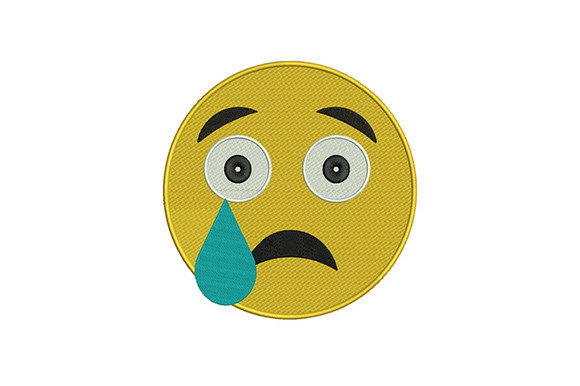
In this context, the design acts as a conversation starter. When a customer picks up a tote bag featuring this motif, they aren't just buying a bag; they are buying a shared sentiment. The stitching needs to be crisp enough that the tears are distinct, turning a simple yellow circle into a character with depth. For a sweatshirt embroidery project, the design would sit comfortably on the chest or pocket area, adding a touch of personality without overwhelming the garment. The key here is the balance between the design's simplicity and the texture of the fabric. On a soft fleece sweatshirt, the design should pop with dimension, while on a smooth cotton tote, it should remain flat and graphic.
Technical Performance and Stitch Clarity
When evaluating any embroidery file, I pay close attention to how the different stitch types interact. This design likely utilizes a combination of satin stitch for the outline to give it definition and fill stitch for the main face area to ensure full coverage. The tears themselves might rely on running stitch or short satin runs to mimic the flow of liquid. In a practical review, I found that the success of the final product hinges on these transitions.
If the stitch density is managed correctly, the Crying Face Emoji will have a professional finish that commands trust from buyers. Customers expect handmade products to look polished, even if the design is whimsical. A sloppy fill stitch can make a premium item look cheap, whereas clean lines and consistent tension elevate the perceived value. For commercial embroidery projects, consistency is king. Every time you run this design, it must look identical to ensure brand consistency across all your small shop products.
However, there are limitations. This design is not suitable for every surface. Trying to embroider this on a curved cap can be tricky unless you use a specialized hoop and precise digitizing adjustments. The curvature can distort the circular face, making the eyes look uneven. Similarly, on thin or stretchy fabrics, the weight of the thread can cause the material to pucker, distorting the expression. For these materials, a sturdy stabilizer is non-negotiable to maintain the integrity of the finished product.
Where to Use Carefully: Constraints and Challenges
While the Crying Face Emoji is versatile, it demands respect for the medium. There are specific scenarios where this design might struggle. Small hoop sizes are a primary concern. If you attempt to shrink this design down to fit a tiny patch or a very small logo on a hat, the tears may disappear or merge into the background, losing the entire point of the expression. Detail level is another factor; if the original digitizing includes very fine lines for the tears, they might break up on textured fabrics like denim or heavy canvas.
Dark fabrics present another challenge. The contrast between the yellow face and the dark background is high, which is generally good, but the white or light-colored tears need to stand out clearly against the dark threads of the shirt. If the thread colors chosen do not offer enough contrast, the emotional impact is lost. Furthermore, for products that require frequent washing, such as kitchen towels or work aprons, the durability of the stitches becomes critical. Loose ends or areas with excessive thread buildup can snag during laundering, leading to a damaged appearance after just a few washes.
Impact on Brand and Customer Perception
Choosing the right design assets can significantly influence customer trust and engagement. A well-executed embroidery project signals professionalism. When a buyer sees that the Crying Face Emoji is stitched cleanly, with no loose threads and proper alignment, they assume the rest of the craftsmanship is equally high quality. This perception is vital for Etsy sellers and creative entrepreneurs looking to build a loyal following.
The design also enhances the giftability of your products. People love giving personalized gifts that show understanding. A sweatshirt embroidered with this emoji for a friend going through a tough time can be a thoughtful gesture, provided the execution is flawless. It transforms a mass-produced icon into a meaningful, handmade token. However, if the stitching looks amateurish, the message is lost, and the item may be seen as a low-quality novelty rather than a cherished keepsake.
Practical Notes for Designers Before You Start
Before committing to a production run or listing a new item, there are several steps every designer should take. First, always test the design on scrap fabric that matches your final material. This allows you to see how the thread colors interact with the specific fabric texture you are using. Check the hoop size required to ensure the design fits within your machine's capabilities without unnecessary trimming.
Review the stitch density carefully. If the center of the face is too dense, the fabric might pull inwards, creating a dimple effect that ruins the face shape. Inspect small details like the corners of the mouth and the tips of the tears to ensure they are defined. Testing the design in black and white mockups can help you visualize the contrast before spending money on thread. Compare how it looks on both light and dark backgrounds to ensure versatility.
Finally, confirm the licensing terms. Even though this is a digital product, selling finished items made from it often requires a commercial license. Ensure you have the rights to sell the finished product or use it in your craft business inventory. By taking these precautions, you ensure that the Crying Face Emoji remains a reliable asset in your portfolio, ready to brighten up a tote bag design or a holiday gift whenever the moment calls for it.