Cartoon Avocado in the Hoop Keyfob Review
As a professional embroidery designer who has spent years crafting assets for small business merchandise, I approach every new digital file with a critical eye. When evaluating Cartoon Avocado in the Hoop Keyfob, I am not just looking at a cute image; I am assessing its viability as a commercial asset for branding, staff uniforms, and product packaging. In the competitive world of handmade brands and Etsy shops, the difference between a generic decoration and a cohesive brand identity often lies in the technical execution of the design.
This review focuses on how this specific machine embroidery design performs when integrated into real-world business applications, from boutique keychains to high-volume apron production. The goal is to determine if this file offers the versatility and durability required for professional use.
First Impressions: Visual Personality and Brand Fit
The title Cartoon Avocado in the Hoop Keyfob immediately suggests a playful, approachable aesthetic. Unlike rigid corporate logos, this design leans heavily into the "handmade" vibe that resonates so well with food businesses, bakeries, florists, and creative studios. The cartoon style implies friendliness and accessibility, making it an excellent choice for brands that want to project warmth rather than formality.
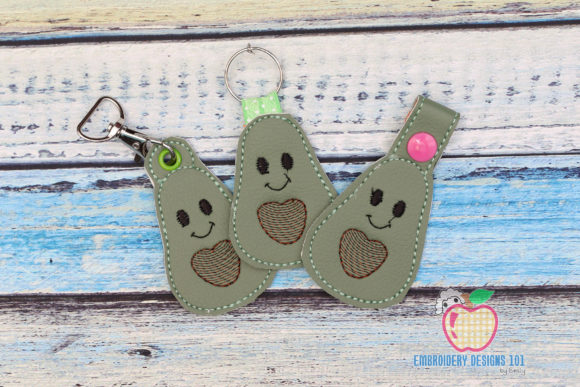
From a design perspective, the inclusion of three distinct versions—Snap Tab, Eyelet, and Ribbon—adds significant value. This versatility allows a business owner to tailor the finished product to their specific merch line without needing multiple files. Whether you are creating a soft key fob for a gift bag or a structured patch for a uniform, having these variations within a single purchase streamlines your workflow. The 4×4 hoop compatibility ensures that even smaller shops with limited equipment can utilize this design effectively, while the 5×7 option provides room for more detailed stabilization or larger fabric pieces.
Real-World Application for Small Business Merch
When I envision this design in action, I see it serving as a powerful tool for brand recognition across various touchpoints. For a local café or a boutique bakery, the Cartoon Avocado in the Hoop Keyfob could serve as a premium add-on for customer orders. Imagine attaching a finished key fob to a coffee cup sleeve or placing it inside a bakery box. It transforms a standard transaction into a memorable branded experience.
In the realm of staff uniforms, this design shines as a chest logo accent or a detail on a work shirt. The cartoon nature fits perfectly with casual environments like pet brands, craft stores, or eco-friendly product lines. It breaks up the monotony of solid colors without overwhelming the wearer. Furthermore, the ability to produce this as an embroidered patch means it can be easily applied to items that are difficult to embroider directly, such as denim jackets, canvas tote bags, or even baseball caps.
For Etsy sellers and digital file buyers, this asset is particularly valuable. It allows for rapid prototyping of custom apparel and accessories. You can create a cohesive look by using the same avocado motif on tote bags, aprons, and product labels, ensuring visual consistency across your entire storefront. The design acts as a versatile anchor for your brand's visual language.
Strategic Use Cases for Apparel and Accessories
- Tote Bag Design: The design works beautifully on canvas totes sold as part of a gift set or as a standalone item. The keyfob version can be attached as a charm, adding a tactile element to the bag.
- Apron Embroidery: For chefs, bakers, or florists, this design adds a personal touch to professional gear. It signals creativity and attention to detail.
- Cap Embroidery: While the full keyfob might be too large for a cap front, the design elements can inspire a smaller patch application on the side or back of a hat.
- Product Packaging Accents: Sewn onto cardboard boxes or paper bags, the design elevates the unboxing experience, reinforcing the brand identity before the product is even opened.
Critical Considerations and Limitations
While the potential is high, a professional must exercise caution regarding where and how this design is deployed. Not every surface is suitable for every embroidery technique. The stitch density and the specific details of the cartoon outline need to be scrutinized before mass production.
If you plan to use this as a small patch size, be aware that intricate details may get lost or become stiff. On curved surfaces like the front of a cap, the design needs to be carefully digitized to accommodate the curvature, or it may pucker and distort. Similarly, on dark uniforms, the thread color contrast is paramount. If the design relies on light outlines against a dark background, ensure the underlay and fill stitches are robust enough to prevent the fabric from showing through.
Fabric texture also plays a crucial role. On highly textured fabrics like thick wool or loose-weave linen, the definition of the cartoon lines might blur. Additionally, items that require frequent washing, such as daily-wear work shirts, need to be tested for durability. The satin stitches used for outlines can sometimes snag if the stabilizer is not adequate or if the thread tension is off. Always verify the recommended hoop size and stabilizer type to ensure the finished product withstands the rigors of commercial use.
Impact on Brand Identity and Customer Trust
In the modern marketplace, customers associate the quality of embroidery with the quality of the business itself. A sloppy stitch job or a design that looks cheap can erode customer trust and lower the perceived value of your products. Conversely, a well-executed digital embroidery file like the Cartoon Avocado in the Hoop Keyfob communicates professionalism and care.
When a customer receives a neatly embroidered key fob or sees a crisp logo on an apron, it reinforces the message that the business values craftsmanship. This visual consistency helps in building a recognizable brand presence. The playful nature of the avocado design can increase buyer engagement, making the brand feel more relatable and human. However, this only works if the final output matches the quality of the digital mockup.
Practical Designer Notes for Production
Before committing to a large run, follow these essential steps to ensure success. First, test the design in black and white. This will help you visualize the stitch density and spacing without the distraction of thread colors. Check if the design holds its shape when scaled down to a small patch size; if the details are too fine, they may not translate well to the final fabric.
Review the thread color contrast against your intended fabric. Ensure there is enough separation between the outlines and the fills to prevent bleeding. Confirm the hoop size requirements and select the appropriate stabilizer for your material. Using the wrong stabilizer is a common cause of puckering and distortion. Create a printable mockup for client approval to get a clear idea of the placement and scale before cutting any fabric.
Finally, compare this design alongside your other design assets. Does the line weight match your other logos? Is the style consistent with your overall brand guidelines? Most importantly, confirm the commercial licensing terms. Ensure you have the legal right to use this file for selling merchandise, whether it is for your own shop or for fulfilling orders for clients. By treating this process with the same rigor as any other aspect of your business, you ensure that the finished product delivers the quality your customers expect.